
Very few adults leave home without their smartphone and these devices are everywhere. It’s practically impossible to watch a movie or grab something to eat at a restaurant without being interrupted by loud ringtones or smartphone conversations.
While I like to quietly read my tablet while eating at my local diner, there is no denying the fact that almost everyone is connected, irrespective of age or gender. We all want to share experiences, thoughts and content. Global smartphone and wireless tablet subscriptions are predicted to triple from 1.9 billion in 2014 to 5.6 billion in 2019, according to a report from Ericsson. Portio Research says there will be 4.4 billion global mobile app users by 2017.
High-end mobile tools like 41-megapixel cameras, voice recognition, broadband and an app for nearly every need, allow just about anyone to share personalized content and tell stories in almost any format including text, video, still photography, audio, drawings and more.
Smartphones, with their mind-blowing tools and apps, have changed how we collect and distribute content. Marketing professionals and their brands can now access fresh, original content that reflects the world as consumers see it. Ad agencies and brands are using trusted user-generated content more than ever.
Marketers are turning to UGVC (User generated visual content) or crowdsourcing to engage and build their fan base, save money, use photo authentication technology (no photo shopped photos) and to have a centralized library for their photos and videos. Here is an example of a parachuting “Heineken Moment” that costs under £300 for the task and image. How much would a brand pay for a photo shoot, professional jumpers, camera, plane, insurance, etc perhaps £3,000?
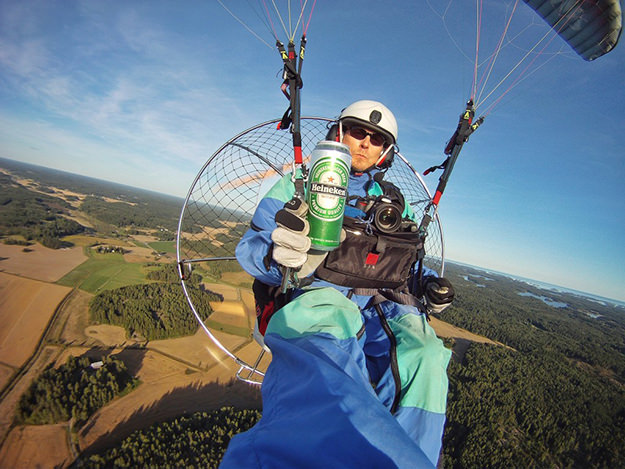
While there will always be a need for professional photographers, videographers, artists and illustrators, media companies now have access to potentially billions of new content creators – smartphone users – who are eager to share.
Agencies and brands must treat this emerging, growing crowd of potential content providers with respect by obtaining proper permission and recognizing the value these images. In the U.S. even content by smartphone is copyrighted and deserves the same treatment as professional content. And, like professional photographers, smartphone users submitting crowdsourced images for commercial use must also adhere to legal obligations for model and location releases.
There are plenty of free apps and web-based management tools for companies to discover, curate and purchase massive volumes of new visual content. They leverage the push/pull features of smartphones to send geo-targeted assignments to huge numbers of amateur and even professional photographers, who can respond to specific multimedia (photo and video) requests in real time.
These new tools can also reduce stock photo and video costs and reduce the time spent searching though hundreds, or even thousands, of files for just the right image. Imagine sending a request to a million people via their smartphone and receiving just the right photo or video clip you need within minutes.
The next time you are in a restaurant or public place, take a guess about how many people have smartphones and consider they all want to share content. Just ask them. They will share content socially, editorially and even commercially as long as they are treated with respect.
By Petri Rahja, Scoopshot.
PrivSec Conferences will bring together leading speakers and experts from privacy and security to deliver compelling content via solo presentations, panel discussions, debates, roundtables and workshops.
For more information on upcoming events, visit the website.
comments powered by Disqus