
When was the last time you enjoyed waiting? Never? We thought so too.
In this day and age, people don’t like to wait, and if you make them wait for your website, you stand to lose influence, visitors, and sales. Worse still, Google recognises that people don’t like slow websites, and takes site speed into account within their rankings algorithm - meaning that if your site is slower than your competitor’s, you risk giving up valuable web traffic to a competitor’s site!
Fortunately, there are plenty of measures you can take to mitigate slow website speeds. Testing your website is a good place to start - resources like Google PageSpeed Insights and Pingdom Website Speed Test can give you a good indication as to what elements of your website are bogging it down.
Once you’ve tested your website’s speed, the next step is to optimise. Start by troubleshooting any elements of your website that your speed tests have indicated are slow. From there, look into any additional opportunities to optimise overall website speed.
Some best practices for optimising speed include:
- Removing outdated plugins that rely on heavy code (like Flash) and replace them with lighter HTML5
- Reorganising content structure and optimize images to accommodate a fully-responsive website structure for better mobile viewing
- Caching any static content to remove redundant requests sent to your host server
- Minifying scripts to remove any extra or unnecessary characters from your source code
- Switching to a scalable website host, like a managed host to accommodate for any rapid increase in traffic
The below infographic details some additional insights on how to optimise site speed. In the Information Age, your customers have an array of e-commerce options at their disposal. Don’t risk giving your traffic up to your competitors with a slow site!
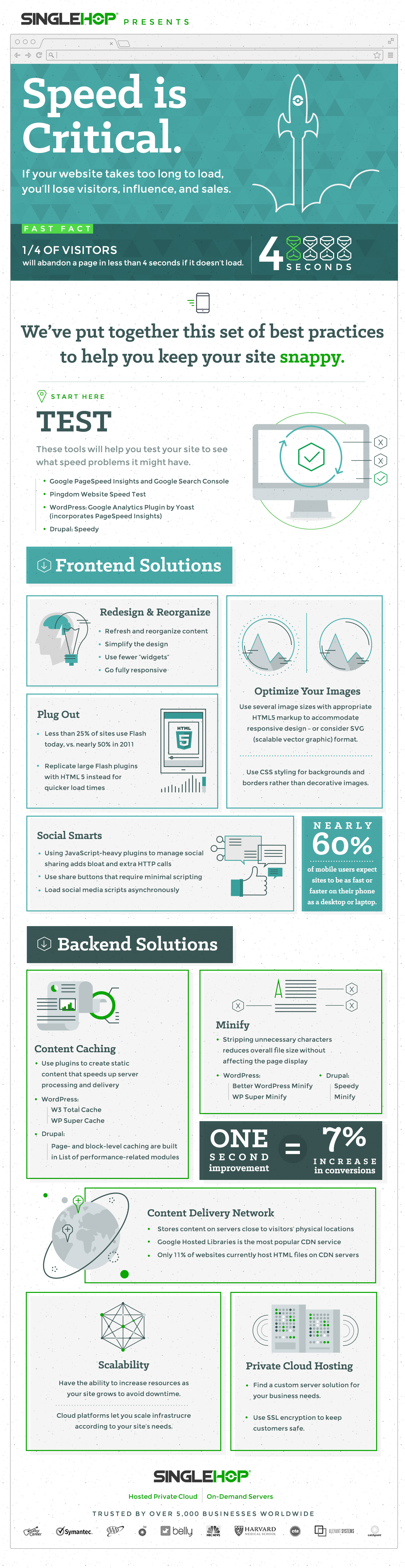
By Rick Talavera at SingleHop.
PrivSec Conferences will bring together leading speakers and experts from privacy and security to deliver compelling content via solo presentations, panel discussions, debates, roundtables and workshops.
For more information on upcoming events, visit the website.
comments powered by Disqus