
In some ways you are who Google says you are. Here is a good way of thinking about reputation
Right/Wrong: Content | Time | Source = Reputation
Because Google can give us the right content at the time we want it, from the right source, it makes it’s information very potent.
We trust Google.
Here is some proof. When we’re considering a purchase, 84% of us are influenced by what we see online. Google is where 91% of us in the UK navigate the internet from.
Pew internet did piece of research on the trustworthiness of Google.
They found on average 66% say that search engines are a fair and unbiased source of information.
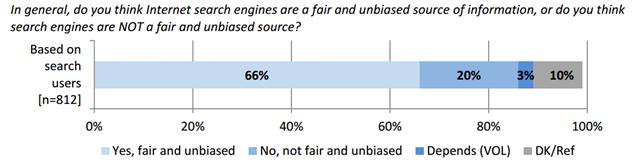
Source: Pew Internet
73% of users think search engine results are very / reasonably trustworthy
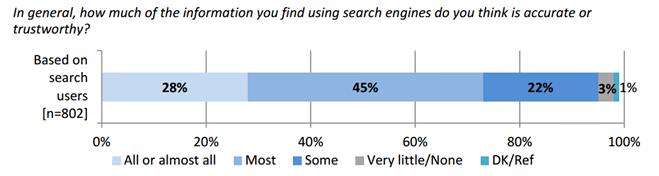
Source: Pew Internet
Another piece of work from Eidelman around trust in information sources, shows that we trust search engines as trusted as traditional media i.e. newspapers and TV
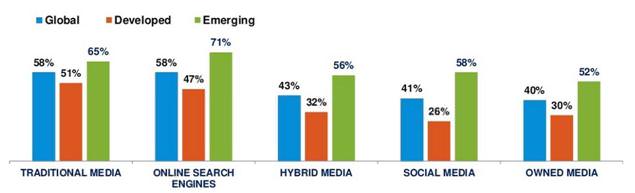
Source: Edelman Trust Barometer
Generally people trust Google and they trust what Google ranks. So arguably your brand is what Google says it is.
We ask Google questions.
When we use Google it's because we have a question to ask. A typical search query is ‘your brand name’, or ‘[your brand] reviews’ and whatever the results are, they will influence consumer buying decisions.
If a brand has a number of bad reviews or negative feedback that ranks on their most important ‘consideration’ phrases, it can be damning. We trust Google and were affected by what we see on it.
We look far and wide online for buyer information.
Google is very good at surfacing information that will help consumers make better buying decisions.
In 2011 Google did a large piece of market research to work out online shopping behaviour prior to a purchase. They found that searching online was as popular as talking with family and friends when making a purchase decision. They also found that on average, shoppers looked at 10.4 sources of online information before making a buying decision.
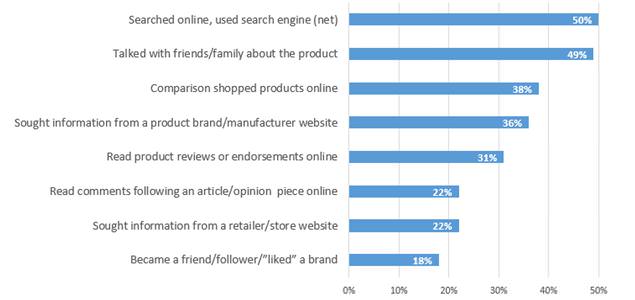
Source: Google
We are affected by reviews.
According to a survey by Dimensional Research with 1046 respondents, 90% of us are affected by online reviews and 86% of us are affected by negative online reviews. This validates the importance of good online reputation for any brand.
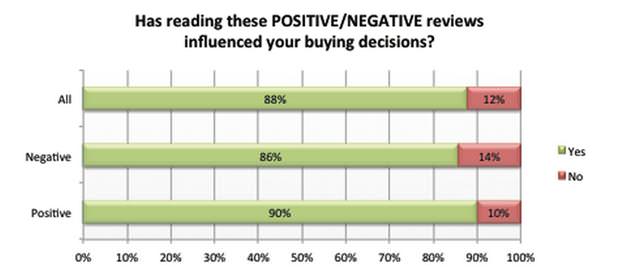
Source: Dimensional Research / Zendesk
Review phrases are ‘consideration’ phrases i.e. someone is thinking about buying, but hasn't made their minds up, so they want some 3rd party unbiased information to help them make a decision.
So when you add all this up, you have Google who we trust, reviews and authority content surfaced by Google which we respond to, all making Google a reputation hot spot.
By Nick Garner, CEO of 90 Digital.
PrivSec Conferences will bring together leading speakers and experts from privacy and security to deliver compelling content via solo presentations, panel discussions, debates, roundtables and workshops.
For more information on upcoming events, visit the website.
comments powered by Disqus