Returns has been a stumbling block for online retailers for many years. Despite their best attempts, they often struggle to adapt their processes and supply chains to make returns work smoothly especially when there are high volumes of returned items.
However, returns can be a gift for retailers and another invaluable opportunity to engage with your customers. At the very least, ensuring the returns process runs smoothly helps build brand loyalty.
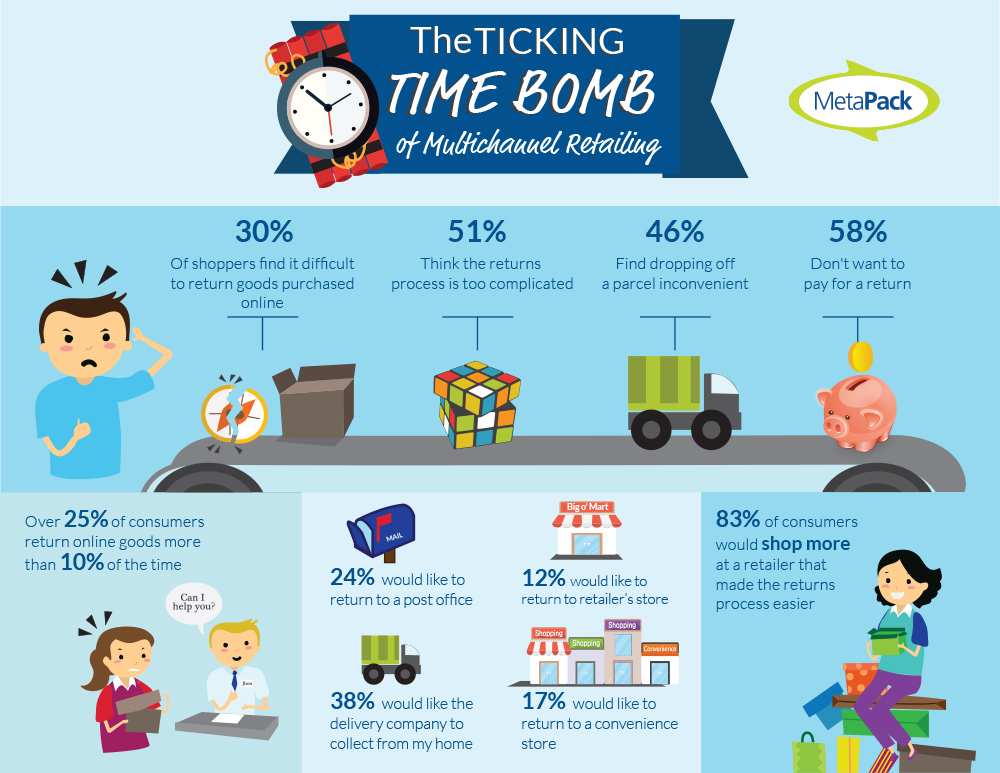
The accepted wisdom is that positive delivery experiences mean repeat business in the future. Now our new research confirms this also holds true for returns. Over 83% of consumers we surveyed said they would stay loyal to a retailer with an easier returns delivery service.
But it is critical that a returns function isn’t a Cinderella service. The retailer needs to offer the equivalent convenience and choice for returns as they do for orders. Indeed in our survey a majority of the respondents said they expect returns to be a free service that’s easy to arrange and convenient.
Consumers are increasingly well-educated about cheap and easy methods of delivery for their order and are now expecting exactly the same convenient service for the return – and they will take their business elsewhere if they don’t get it. Retailers need to be open and transparent in their dealings, so that consumers don’t feel like they’re being conned into a keeping an item due to an extremely complex returns process. Instead they can use this desire for flexibility by offering their customers a variety of return options, catered for their needs.
The link between returns and repeat purchases transcends even the barriers of age and shopping habits. So even retailers which do not traditionally have such a high return rate, unlike apparel, may need to invest in their returns process to maximise potential.
Retailers need to accept that returns may be an increasing trend. In our mix-and-match economy, things are quickly tried and discarded. This can be alarming for the traditional retailer who expects their sale to stick. However, the research shows that an efficient returns policy could provide a compelling competitive advantage in the crowded market and act as a lever to drive sales.
A returns request is an example of invaluable inbound marketing that needs to be optimised, not sidelined. When handling the request, the retailer is getting an opportunity to suggest alternatives. If the returns process allows for customers to drop off their returned order at a click and collect desk, this provides an obvious opportunity to sell.
Making returns integral to the customer experience does come with challenges. While the customer won’t accept any distinctions, the underlying logistical processes are different and inherently more costly than a delivery done as part of a larger delivery round. Some elements of the order delivery network can be utilised for example, the click and collect stores and locker networks.
Ultimately returns can be made to pay if it is helping retain customers and forge loyalty for the long term.
By Laura Hare, marketing manager at MetaPack Group.
PrivSec Conferences will bring together leading speakers and experts from privacy and security to deliver compelling content via solo presentations, panel discussions, debates, roundtables and workshops.
For more information on upcoming events, visit the website.
comments powered by Disqus