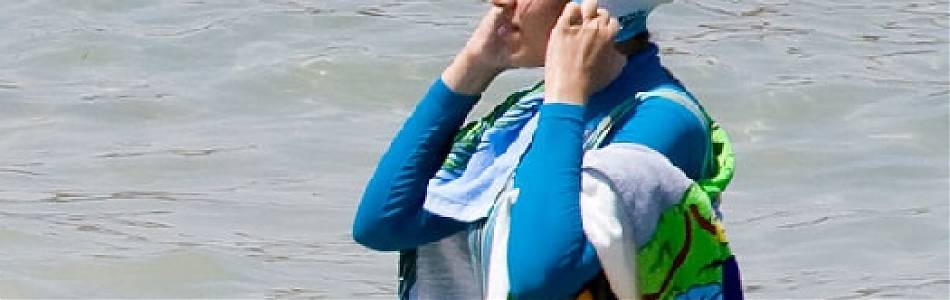
When burkini designer Aheda Zanetti found out her garment was being banned in a growing number of French towns, she probably didn’t think that it would boost sales.
But it seems as though the added publicity has actually caused sales to take off, as the credited designer says online trade has increased by 200%.
Although the burkini was created over a decade ago, the burkini first came to everyone’s attention in 2007 when a young Muslim girl wore one when she competed in a Surf Lifesaving Australia event.
The company had introduced a program to integrate Muslim boys and girls into surf lifesaving after the Cronulla riots, stemmed by tensions between Sydney’s Lebanese and white populations.
More recently, this month has seen a surge in burkinis becoming the main focus of headlines, as a series of French towns banned the swimsuit citing security concerns following brutal extremist attacks.
A town in Upper Corsica, Disco, became one of 15 towns to ban the swimsuit after five people were injured in a beach brawl which began after locals began taking pictures of North African families wearing the full-bodied burkinis.
Those who wear burkinis in towns where the ban has been enforced face fines under the new rules.
French Prime Minister Manuel Valls backed the burkini banning, saying they are not compatible with French values and are based on the “enslavement of women”.
However, Aheda Zanetti says her garment is misunderstood and speaking to The Guardian, she said the creation of the burkini was “to give women freedom, not to take it away”.
The 48-year-old from Sydney said the inspiration behind the garment came from watching her young niece play netball in the traditional Muslim hijab headscarf and realised there was a gap in the market for modest sportswear.
Ms Zanetti said she wants her clothing to give women the confidence to participate in going to the beach or swimming pool and it isn’t just Muslim women who are interested.
Ms Zanetti said that on a recent Sunday, she received 60 orders, all of them from non-Muslim women. Usually, she would only receive between 10 and 12 orders, proving that even bad news can sometimes be good news for businesses.
PrivSec Conferences will bring together leading speakers and experts from privacy and security to deliver compelling content via solo presentations, panel discussions, debates, roundtables and workshops.
For more information on upcoming events, visit the website.
comments powered by Disqus