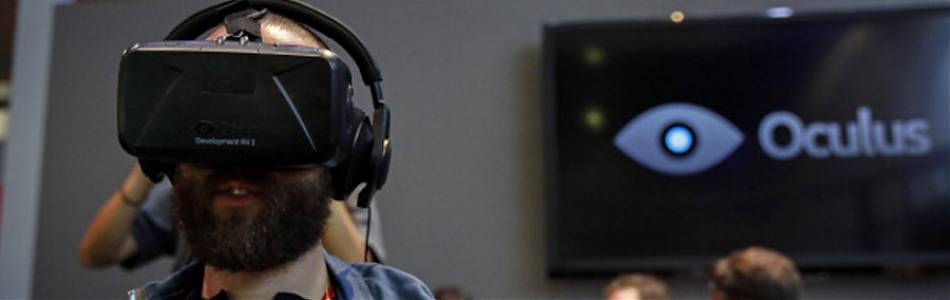
Since its acquisition by Facebook for $2bn in March, there has been much speculation and debate around the Oculus Rift. Previously well known to those in development and design as the hugely successful kickstarter project, (initially funded in 2012 for over $2m from a $250,000 goal), the question now being asked is how can this really be used to create brand experiences?
This article considers the potential of the Oculus Rift, and why brands should sit up and pay attention to Virtual Reality.
For us, the excitement is in the experience. Rather than this just being another platform for viewing, the Oculus Rift and virtual reality opens up revolutionary new ways of telling multi-sensory brand stories.
Outside gaming, we see virtual reality being adopted into the mainstream but it's hard to say how quickly this will happen at the moment. As someone who managed to get one of the first development kits I've been converted from the start but also recognize that there are a number of problems to overcome from motion sickness to quality of graphics. Yet the technology of the near future is set to only get better and better and virtual reality will be an integral platform for experiencing content.
A host of additional tools are going to make the virtual reality experience more immersive, spanning through from uses from brands and entertainment right through to teaching, such as trainee surgeons virtually honing their skills. Already numerous types of hardware are addressing the problem of the disconnect between the real and virtual worlds, such as technology that enables users to touch virtual objects, and treadmills that allow users to walk in the virtual world but stay stationary in the real one. Other cutting edge experiments also look at placing the user within the virtual world using the Microsoft Kinect.
There are plenty of opportunities where the Oculus Rift can be explored by brands, from events, live streaming range through to sports and travel. Some companies such as O2 have already released 360º film content that places the consumer at the centre of the experience for the rugby 2014 Six Nations. This potential to place the consumer at the heart of a brands world has exciting potential for the future. For example, imagine experiencing the iconic Nike World Cup adverts from within the scene or watching a live concert from the comfort of your own home.
The discussion now is about content, and what form that will take. There is not yet any industry benchmarking to what works and what doesn't. This makes it an exciting time to explore what's possible with this type of interactive design.
We are excited to see what the potential is for the future and are developing tester content to see what is possible.
By Paul Dixon, Director of Motion at DesignStudio.
PrivSec Conferences will bring together leading speakers and experts from privacy and security to deliver compelling content via solo presentations, panel discussions, debates, roundtables and workshops.
For more information on upcoming events, visit the website.
comments powered by Disqus