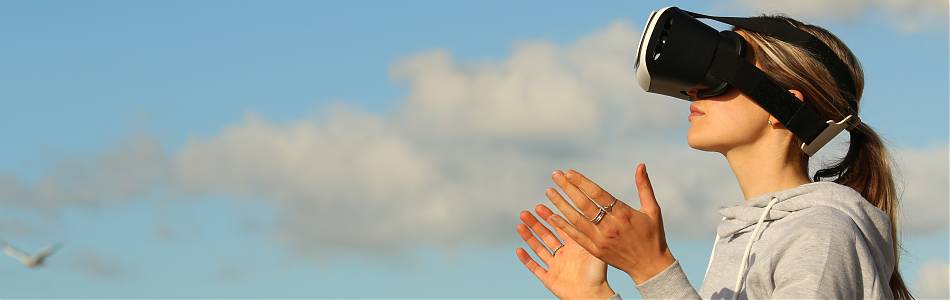
From increasing virtual reality games and entertainment releases to the ever-growing VR capabilities for the enterprise, there is no question that virtual reality will become more embedded in our daily lives. In fact, Goldman Sachs predicted earlier this year that by 2025 consumers will spend $80bn on VR/AR (Augmented Reality) technology alone.
From a marketing perspective, VR allows users to have fully immersive experiences which deepen consumer engagement and understanding of a brand.
Marketing professionals can use VR to tell their brand stories and create tangible experiences for their customers. For example, fashion retailers can offer the ultimate front-row catwalk experience; car manufacturing companies can match the experience of test driving new cars and estate agents can tour customers around properties without them even being there – all without the user having to leave their home or office.
VR isn’t a hypothetical technology you may use in five years’ time—it’s here and ready!
So what are some ways you can integrate VR in your marketing strategy?
Launch your product with VR
Virtual reality can make the experience of a live demo a quick, convenient and exciting process. Customers and influencers can test out new products and services without having to wait for a sample or travel to a physical event. A good example of this was the launch of the Jaguar electric I-Pace. Jaguar invited 25 journalists to a 25-minute VR presentation, showing the key features of the new car. Attendees also enjoyed a car racing game through their headsets. The product launch created an exciting and intriguing experience that resonated with those that attended.
Front row experiences without leaving home
With VR, it is easy for consumers to experience an event without leaving the comfort of their own home. Sports matches, concerts and theatre productions can all be attended by VR users, allowing brands to increase the attendance of their events without maxing out the venue capacity. For instance, Sky’s VR app allows its users to experience some of the world’s biggest sporting events, as well as a number of Sky VR exclusives including performances from the English National Ballet and walking the Star Wars red carpet. Their customers can tune into their favourite events through a headset and experience the event as if they were actually sitting in the front row.
In-person services, online convenience
For retail brands, VR is predicted to be the next big thing. Retailers can bring their consumers an array of virtual realities that can take the shopping experience outside of stores. After the release of the John Lewis Christmas ad, the retail company set up a VR experience in their flagship Oxford Street store and online. The experience brought to life the character of Buster and his friends, for users in-store and online. Soon, retailers will have the option to use VR to allow their customers to try products as if they were in the physical store. Along with big data insights, the virtual experience will be tailored to suit each customer giving them personalised shopping trips without needing to enter a shop.
A virtual view of business leaders, celebrities and public figures
With the evolution of social media, public figures have never been closer to their audiences. Their lives are documented through the likes of Snapchat, Twitter and Instagram, allowing their followers more access to their private lives. However, VR can take this a step further. You are now able to experience being in a room with your favourite celebrity, politician or business leader while sitting on your sofa. This experience allows public figures to connect with their followers on a personal, more emotional basis.
Before the 2016 Rio Olympics, a VR-led interview was held with Sir Steve Redgrave. Hosted by Samsung, the interview combined virtual reality with live streaming. A group of journalists from London sat in a room with VR headsets on, while Steve watched them from a live stream in Rio. With the headset on, the journalists looked as if they were sitting directly in front of the retired Olympic athlete while being able to see around the entire room.
Is your brand VR-ready?
Many VR campaigns cost a fortune, especially if you require Hollywood-grade special effects and personalised experiences. However, smaller apps such as Google Cardboard are a good way to start testing out if VR works for your brand. Recently, the New York Times delivered one million Google Cardboard virtual reality headsets to their subscribers. Their VR videos have covered the US presidential election, a tour around a town in Iraq and the aftermath of the Paris terror attacks. Although they used a smaller app, the impact was still as significant. They were able tell stories and create a full immersive experience for their subscribers.
However, no matter how glamourous and trendy VR is, don’t launch a VR campaign for the sake of doing it. Make sure that your campaign will benefit your customers' experience and that it will enhance your brand. Not only would a bad VR project be a waste of your time it would also be a waste of your money. Consider what you want from your VR campaign and what you want your customers to take away from it. If this is done correctly, VR can be one of the most useful tools you can use to fully engage with your audience.
By Claire Walker, CEO and founder of Firefly Communications
PrivSec Conferences will bring together leading speakers and experts from privacy and security to deliver compelling content via solo presentations, panel discussions, debates, roundtables and workshops.
For more information on upcoming events, visit the website.
comments powered by Disqus