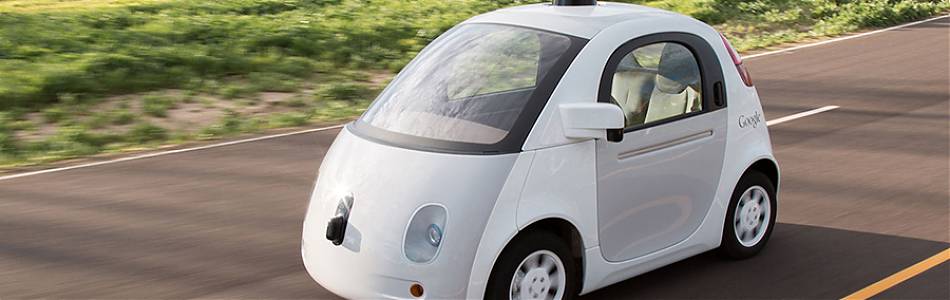
From tech giants Google and Baidu, to automotive heavyweights General Motors and Toyota, over thirty companies are in the race to perfect their technology and bring driverless cars to the general public by 2020.
These global companies are investing huge sums of money in cars driven by artificial intelligence and it’s not so people can enjoy a couple of drinks and drive home - after all there’s a thriving cab industry to meet that need.
The reason driverless cars will soon be taking to our roads is that they are so better at driving than people. Tesla CEO Elon Musk estimates they deliver ‘a safety level at least twice that of a person’.
Humans are capable of processing an image at between 13-80 milliseconds and take a further 277 milliseconds to perform a simple action. Multiply this up by, say, five factors, and the time required to make a judgement becomes much greater – not to mention the probability of making the wrong decision.
There are over 5 million car accidents reported in the US each year – 94% of which are caused by human error. Compare this to Google’s autonomous cars which have driven over 2 million miles and suffered one serious accident – and that was because a human-operated car ran a red light. People are simply not capable of processing enough data to make the correct decision in a split second - artificial intelligence is.
But what can this teach marketers about advertising? Similarly to driving a car, when it comes to running a digital ad campaign dozens of factors can affect the final outcome, namely if a person will watch an ad or not. The length of a video, the type of content, the format it’s delivered in, environment it’s shown in, the location of the user, the time of day, the user’s previous ad interactions, online and offline behaviour – the number of potential variables and combinations is mind-blowing.
To determine whether someone is likely to watch an ad it’s necessary to analyse the data from all of these factors in real-time and calculate the likelihood of a user carrying out the desired action. Advertising is then delivered only to the people who are the most likely to engage.
If AI is not used the best result will be some general assumptions made by the ad ops professional, probably based on opinion rather than data, at a campaign level. For example, women are more likely to view this ad, weekends and evenings are the best time, younger people react better to comedy. The fact that, when given the option, users skip around 70% of adverts, proves human optimisation is woefully inadequate.
It is categorically impossible for a human to perform this analysis and optimisation at an impression level, artificial intelligence must be used. AI can analyse the data received in under 0.005 seconds, processing all the information and determining whether it should serve the ad or put on the brakes. It can also make real-time adjustments to its calculations as it self-learns from new data. When AI takes the driving seat campaigns perform on average 100% better than manual optimisation, saving marketers money on wasted ad impressions and making campaigns far more effective.
Driverless cars will soon overtake our roads because AI makes better decisions than people, it’s time brands applied the same logic to digital advertising.
By Stephen Upstone, CEO at LoopMe
PrivSec Conferences will bring together leading speakers and experts from privacy and security to deliver compelling content via solo presentations, panel discussions, debates, roundtables and workshops.
For more information on upcoming events, visit the website.
comments powered by Disqus