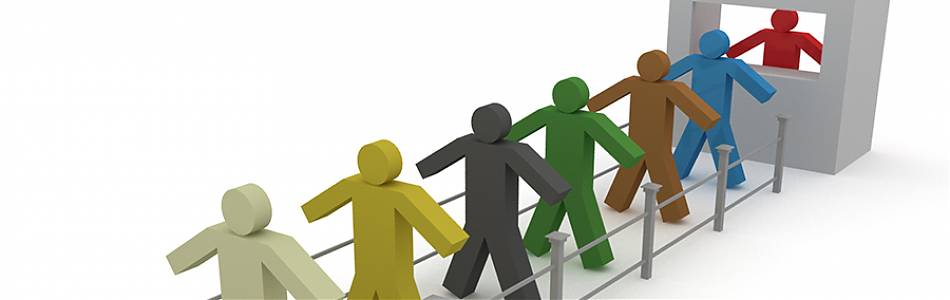
Every iPhone and iPad release since 2007 has seen hordes of anxious Apple fans queuing in line to get their hands on the latest device. According to a leaked memo however and the sales process for the new Apple Watch, it seems Apple are taking steps to stop the long lines that they are synonymous with.
“The days of waiting in line and crossing fingers for a product are over for our customers, this is a significant change in mindset, and we need your help to make it happen. Tell your customers we have more availability online, and show them how easy it is to order. You’ll make their day.” said Apple retail chief, Angela Ahrendts, in the memo leaked to Business Insider.
And it make sense, one of the clearest benefits of shopping online is the time it saves us. When shopping online we don’t need to travel to a store nor do we need to wait around to purchase our goods. But by no means does that meant we should write-off the in-store experience completely. While Apple may be pointing their customers online and communicating to them how easy it is to order online, they are still embracing the concept of show-rooming in that they are already giving their customers the opportunity to try on the new Apple Watch in-store but not allowing them to purchase the device yet.
You don’t need to be a technology giant like Apple to reduce queuing times in your in-store environment however.
Showrooming
As demonstrated by Apple with the Apple Watch, showroom is the ultimate hybrid of the traditional retail store and the online retail environment. With the right multi-channel software solutions and a retail space that showcases your products in the best possible light, you will be able to achieve the best of both worlds.
The concept of showrooming is simple, rather than having a website and a store that are standalone and become disjointed, your physical retail space becomes a showroom for your online store.
Giving customers the best of both worlds, with showrooming you will have all of your products on display where they can be picked up, looked at in close detail and trialled and tried on. The difference to a conventional store is that your full range is not held in stock within the store. Instead the customer orders them in the store and has them delivered to their home or an address that is convenient to them.
To enhance the showrooming experience you could introduce virtual rails into your store. Comprising of a wall length touchscreen, virtual rails allow customers to see products in-situ, look at products in detail and from several angles and in the case of clothing, see it being modelled on the catwalk. Once the customer decides to make a purchase they then use a smaller more personal touchscreen device to enter their payment details.
Constant communication
While click and collect is nothing new and it has done wonders to connect the worlds of online and offline retail, it still requires customers to queue once they reach the store to collect their purchases. In a recent eMarketer article entitled, “Retailers Must Make Buy Online, Pick Up In-Store Worth It,” it was found that consumers spent more time waiting in line when they buy online, and pick up in-store than they would when sampling when visiting a store to purchase. Out of a sample group of customers surveyed for the article, it was found that customers choosing click and collect spend 56% of their time in-store at the checkout, while those completing the entire transaction in-store spend just 15% of their time at the checkout.
A new system (by Localz) currently being trialled in stores in Australia uses micro-location GPS, beacons and Bluetooth low energy to practically put an end to queuing.
When a customer buys an item and chooses click and collect, the technology will keep them constantly updated when at the store. On arrival, they receive a message to their smartphone asking if they would like to collect their item, if answering yes, they receive another message telling them when it will be ready. While if there will be a wait, they will be informed immediately and will be given the option to enjoy a complimentary coffee rather than having to queue. When their item is available, they will then receive a message telling them so.
Mobile and contactless payments
For customers not using your “click and collect” service, looking at the way they pay is also key to reducing in-store queuing times.
As we move more and more towards a cashless society, it is worth considering the mobile payments you can accept in your store. Time-consuming payment methods such as cheques and paper vouchers have come and gone, and the use of cash continues to decline. In their place comes mobile and contactless payment options. Whether it is simply contactless credit and debit cards you choose to accept, or mobile payment systems such as Apple Pay or similar offerings from Barclays, PayPal, MasterCard and Google, these new payment systems can reduce the amount of time your customers spend queuing in-store.
In the case of the Apple Watch, utilising Near Field Communication technology, the device will mean customers no longer have to have the hassle of handling cash or even credit or debit cards. Instead with a swipe of their wrist they will be able to pay for their goods.
By letting your customers pay by simply touching their phone, watch or card on a receiver at the till point, the shopping experience can be simplified and queuing times reduced.
By Dean Ronnie, Marketing at Prima Solutions.
PrivSec Conferences will bring together leading speakers and experts from privacy and security to deliver compelling content via solo presentations, panel discussions, debates, roundtables and workshops.
For more information on upcoming events, visit the website.
comments powered by Disqus