
Social media marketers place great emphasis on link clicks. Social media is – after all – a major contributor for inbound traffic, and link clicks are – after all – a measure for that traffic. The trouble is, one link click on social media doesn’t equal one visitor to your website.
According to our recent study into current spending trends across social amongst B2B organisations, between a third and a half of link clicks for social media ads never make it to their intended destination.
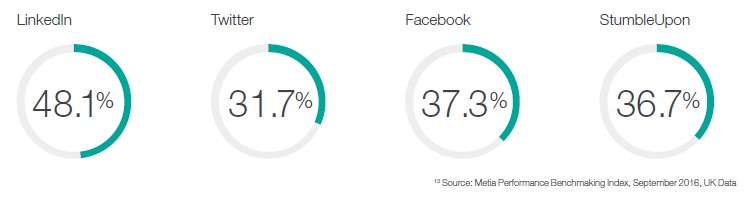
There are several explanations for this drop-off. Users may close a pop-up window before the destination loads, having not realised the ad they clicked in an app would load an external web page. Or maybe they clicked an ad on their commute and a slow connection froze their browser. Unfortunately, there’s no way for advertisers to know for certain as users that drop-off fall into the gap between a social network’s tracking and their own website analytics.
Thanks to smaller screens and slower connections, these problems are particularly acute for mobile users. And given that nearly 80% of social network usage is now mobile, this issue is one that marketers can’t ignore.
The problem also deepens when you consider social media advertising, as social networks charge advertisers for the clicks they generate – no matter how many users actually land on their site. It’s therefore important for advertisers to understand the likely impact of drop-off on their project – and budget – before they begin, and to mitigate against the risks.
One way to reduce the impact of drop-off is by ensuring that audience targeting is highly focused, and by being as explicit as possible in your content when it comes to what you’re offering. You want to generate clicks from within your audience sweet-spot, from people who are genuinely interested in your offer, and are therefore more likely to follow through on their click – even if it means them waiting a few seconds for the page to load on a mobile connection.
It’s also key to ensure your landing environment is fully optimised for mobile usage. A user is far less likely to abandon their journey if your page loads quickly and works well on their device.
Unsurprisingly, this drop-off isn’t publicised by the main social networks, but it is something they are aware of and are working to counteract. Facebook Canvas is one attempt to bypass the problem, allowing brands to tell their stories through videos and images from within network itself – without the need for users to leave the Facebook app. Expect other major networks to follow suit.
With so many challenges facing B2B brands, marketers need to be able to track, measure and optimise their social media advertising campaigns with a greater level of precision. Social media advertising has become such an integral part of the B2B marketing mix, and is perhaps one of the best tools through which brands can harness it to add value to their bottom line.
By Peter Morgan, social and analytics lead, Metia
Want to keep up with the latest ideas in digital marketing? Free conference and exhibition Integrated Live is the place to be.
PrivSec Conferences will bring together leading speakers and experts from privacy and security to deliver compelling content via solo presentations, panel discussions, debates, roundtables and workshops.
For more information on upcoming events, visit the website.
comments powered by Disqus