A lot has been discussed already about TV viewership and simultaneous use of social media. It’s rare to have a TV ad or a TV show without a Twitter hashtag.
The art of multitasking between TV show and having parallel conversations on social channels seems to be on the rise and is fuelled by competitions. And this isn’t just a trend seen in ads - news readers and talk show hosts are more and more prevalent in trying to engage with their audience on social.
But what does that mean for show viewership?
Is it impacted by the multitasking?
Are social channels replacing actual viewership?
We looked at this year’s BAFTA Television Awards and the Eurovision Song Contest as case studies of this phenomenon.
Using social media data from our platform, Crimson Hexagon, and TV viewership data from BARB ratings, we analysed how the social media conversation surrounding the BAFTAs matches up with the TV viewing figures:
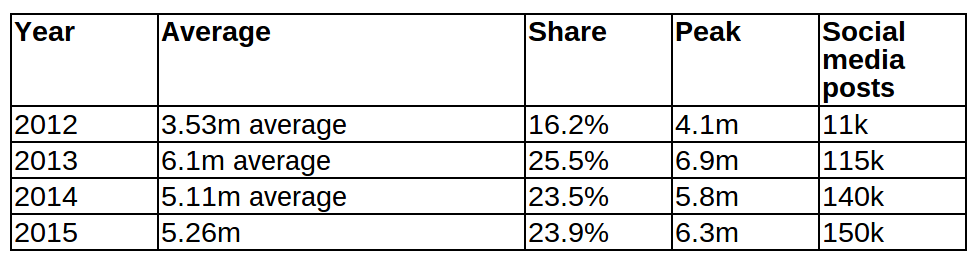
Social media conversation has grown exponentially for BAFTA over the years, and in this instance we’ve only looked at posts that contained the official Television Awards event hashtag; #BAFTATV and variations.
According to Pippa Irvine, Head of Digital Communications at BAFTA, the top moment of the show on social media in 2015 came when Ant & Dec accepted their award for Best Entertainment Performance, causing a peak of almost 800 Tweets Per Minute. This likely stemmed from one tweet Ant and Dec sent which garnered over 1,100 retweets.
The Tweet was sent at 8:40pm on the day of the Awards and when comparing the time to the TV viewing figures, it chimes in nicely with the 2nd highest audience peak of the evening – of 6million viewers at 8:55pm. Overlapping these 2 data sources gives BAFTA a deeper understanding of viewer behaviour.
So how can social data analysis inform an engagement strategy for TV shows and advertisers?
Let’s start with the topics of these conversations. We analysed the social media buzz surrounding the BAFTA Television Awards between 2012 and 2015. The main topics identified were: Red carpet, competitions (led by brands), House of Fraser (title sponsor), Host and people sharing their disappointment for their favourite show not having made it to the nominees list.
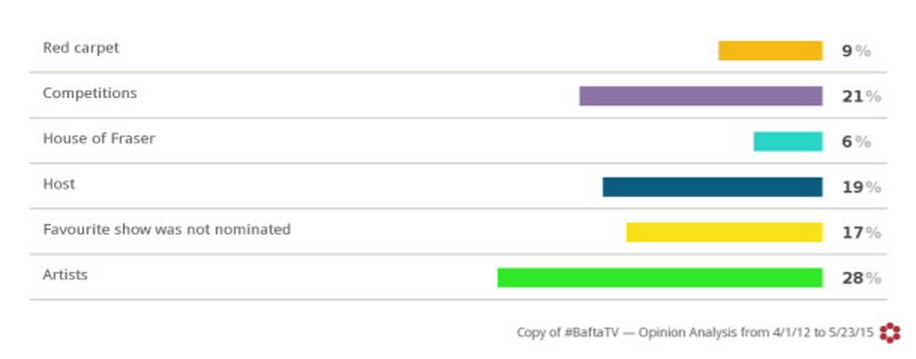
It’s to be expected that viewers talk about the nominated and winning artists. But other topics of conversation show that viewers are willing to engage around other subjects, which brands can leverage to drive meaningful conversations around. Competitions, for example, can be very successful when they tie in well with the show in question and add value to the viewers.
However, brands should be careful when jumping on the social media bandwagon. For the 2015 BAFTA Television Awards, Pizza Express created The Benedict pizza - but the conversation fell flat shortly after the idea was launched.
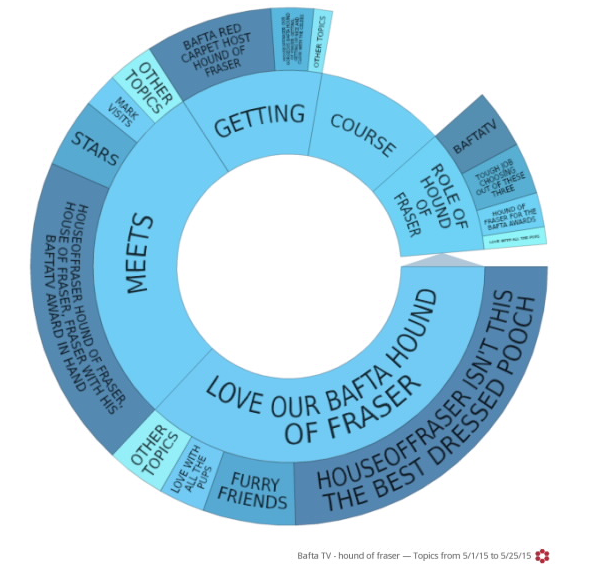
It’s interesting to see that title sponsor House of Fraser made up 6% of the conversation. Part of this was focused on sharing news of the partnership but the “Hound of Fraser” campaign didn’t go unnoticed on the awards night as the below topic wheel shows, and it had an overwhelmingly positive sentiment.
Other valuable insights derived from social media that brands and TV show producers can leverage are related to audience analysis. When compared to the wider Twitter audience, people talking about BAFTAs show a strong affinity with Netmums, Kids and babies and Supermarkets:
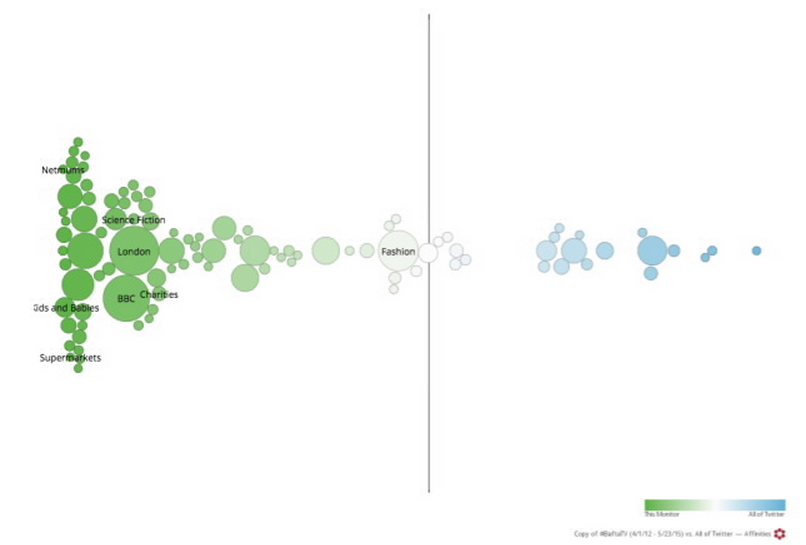
This type of information is valuable not only for advertisers but also for BAFTA themselves, who can start engaging with certain types of content addressing this audience before the show.
A similar situation can be inferred for the Eurovision Song Festival. During the final, Eurovision achieved the 6 Million tweets mark and 195 million viewers across Europe (and Australia!) - that’s twice the Super Bowl audience. While a big chunk of the conversation focused on the acts and the countries of origin, there were other topics of conversation taking place:
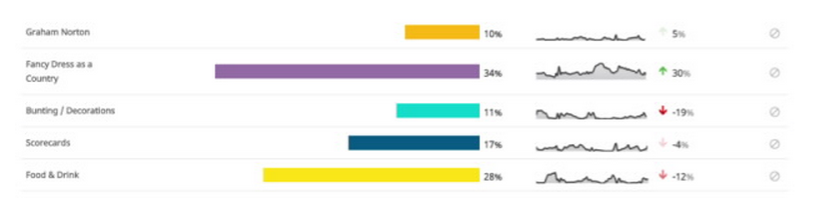
It’s all about creating the best experience for the viewer.
Social media is more than a second TV screen in the living room. It’s a channel that can be leveraged as a two-way conversation between broadcaster and viewers.
A broadcaster and advertiser that understand their viewers and the conversations taking place on social will reap the rewards of providing them with the optimum viewing experience before, during and after the shows.
By Liliana Osorio, EMEA Marketing Manager at Crimson Hexagon.
PrivSec Conferences will bring together leading speakers and experts from privacy and security to deliver compelling content via solo presentations, panel discussions, debates, roundtables and workshops.
For more information on upcoming events, visit the website.
comments powered by Disqus