Google hosts an unimaginable – some might even be tempted to say ‘infinite’ – volume of content.The search engine’s oh-so-clever algorithm does a spectacular job of sorting the wheat from the chaff, but there’s a tool that can further help guide said algorithm in the right direction.
Google authorship, as it’s known, helps good quality content gain greater search visibility by capitalising on the author’s credibility as quality writer. Authorship does this by enabling individual authors to link to and “claim authorship” of published online content.
Google has been supporting authorship since June 2011. But the increasing overlap of its core search product with its other products, like Google Plus, Gmail and Maps has seen authorship turn into a hot topic.
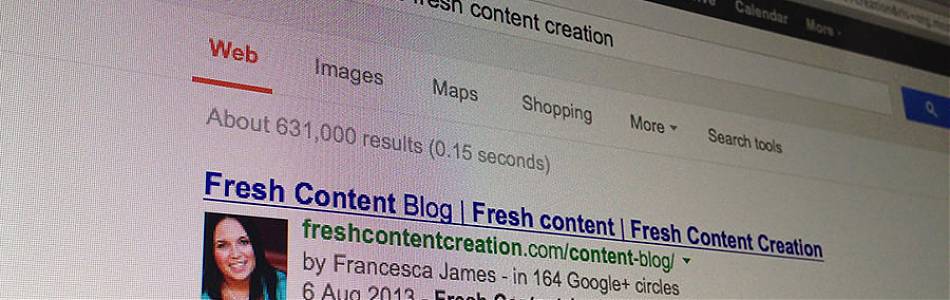
Essentially, published content linked to a Google Plus profile will have greater prominence in search results. Predictably enough, writers in the technology sector have been early adopters of the platform and some of the content published by these sources effectively demonstrates authorship’s visual benefit. By integrating author headshots and linking to Google Plus profiles, authored results will be far more prominent than other natural search results.
Authorship is straightforward to implement. Firstly, it simply requires an author to have a Google Plus profile associated with the blog or website they contribute to. Secondly, those sites need to reciprocate the link from published content to the author profile, in order to generate these prominent headshot search results.
With Google Plus, authors are able to build the number of “circles” they are included in, much in the way that “likes” or “followers” are amassed through Facebook or Twitter. The logic goes that the more following and profile an author has, the more authority Google will give their content.
Perhaps the key question when it comes to authorship is: how can businesses capitalise on this Google offering?
Authorship gives everyone who publishes online a great opportunity to enhance their presence across Google’s search landscape. Writers and bloggers are more easily able to establish themselves in search results; publishers like newspapers can link their content to author profiles and achieve more noticeable search results; and brands can use authorship to help establish themselves as experts in their field.
Unofficial evidence points to the fact that click through rates (CTRs) are increased when authorshiplinked profiles are displayed in search results. Search marketing blog, Catalyst, reported a 150% increase in CTR after implementing rich snippet mark-up. Meanwhile, on respected search industry blog, Moz.com, Cyrus Shepard wrote extensively about how testing and changing his author profile image resulted in a 35% CTR increase.
While it may seem that Google authorship is a platform best tailored towards individual writers or bloggers, there are several ways in which businesses can benefit, especially when it comes to niche markets.
By Ed Brown, SEO Strategist at search and social media agency, DBD Media / @dbdsearch.
PrivSec Conferences will bring together leading speakers and experts from privacy and security to deliver compelling content via solo presentations, panel discussions, debates, roundtables and workshops.
For more information on upcoming events, visit the website.
comments powered by Disqus