
How to successfully measure and report on all elements of an email marketing campaign
Email marketing’s most compelling USP is its measurability. Accurate, near real-time reporting means testing, execution, and the resulting return on investment can all be calculated with high levels of confidence.
Campaign Metrics
All email programs should be able to measure the following metrics:
• Delivered/Inbox Placement Rate (IPR)
• Bounced (hard, soft, deferred, blocked)
• Opened
• Clicked
• Unsubscribed
• Complained
There is more than one way of looking at some of these metrics. For example:
• Delivered vs Inbox Placement: The Delivered metric relies on a “sent less bounced” calculation. Delivery to a spam/junk/bulk folder is regarded as successful. IPR considers only emails that are actually delivered to recipients’ inboxes.
• Opened vs Read Rate: The Open metric relies on the activation of a single-pixel image. This metric can be skewed by factors such as image disablement, and “false” opens from preview windows. Read Rate considers only instances of the email actually being opened, and is more accurate as a result.
However, metrics are meaningless if there is no benchmark against which to evaluate them. These could include:
• Past performance: How does the program measure against historical performance?
• Changes in strategy: Which changes delivered incremental uplift with subscribers?
• Top domains: Are there significant variations in performance between Hotmail and Gmail (for example) which might indicate that domain-specific optimisation is required?
• Industry sector: How is the program performing against sector averages?
• Specific competitors: How does it benchmark against specific competitors?
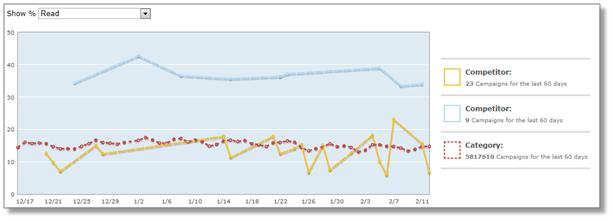
Figure 1: Competitor email campaign Read Rate figures over a 60 day period
Also consider the relationships that exist between some of these metrics:
• Clicks to Opens: The ratio of recipients who open their emails to those who actually respond to them provides an important engagement metric.
• Total vs Unique: Unique opens and clicks provide an accurate measurement of activity. However, the ratio of total opens/clicks to unique opens/clicks provides another measure of engagement.
• Unsubscribes to Complaints: If the former is lower than the latter, it points to potential issues with the program’s opt-out process such as lack of visibility, difficulty to use, or insufficient trust.
• Disaffection Index: The aggregate of all churn metrics – bounces, unsubscribe requests, and spam complaints.
• Sign-Up vs Churn: If addresses are being lost from the program faster than they are being obtained, there may be fundamental engagement issues.
• “Positive” clicks vs “Negative” clicks: Total clicks can be misleading if a high percentage are for non-offer links such as “Terms & Conditions.”
• “View web version”: A high percentage for this metric can indicate rendering and/or user experience issues. It could also highlight mobile users who are struggling with non-optimised content.
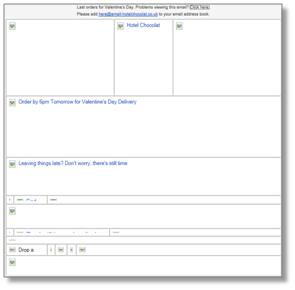

Figure 2: Imaged disablement example; this can have a significant impact on subscriber engagement
Engagement Metrics
Engagement metrics as interpreted by ISPs have already been examined. However, there are a number of other facets to engagement:
• Recency: Recency is usually based on last opened/clicked. However, other signs of activity (last website visit, last login, last transacted) are also important. We advocate using a recency “heartbeat” that draws on all of these data points.
• Web analytics: What percentage of site traffic is directly attributable to the email program? What is the average visit duration? What percentage goes on to convert, and what is the average order value?
• Web sentiment: Is social media commentary about your email program positive or negative? Which offers are trending? Who are your most prominent advocates?
Mobile Metrics
The increasing use of mobile devices to read emails means new metrics are required to support these subscribers, including:
• Environment: Mobile, desktop, webmail
• Device: Smartphone, tablet, phablet
• Operating System: IOS, Android, other
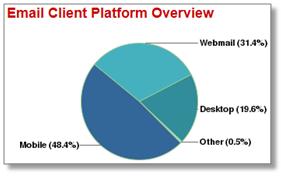
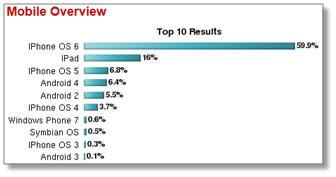
Figure 3: Statistics on mobile device, operating system and viewing environment
Accurate measurement enables email marketers to introduce variations to their creative images and content so they are optimised for mobile readers.


Figure 4: Variations in what content is displayed and how it is viewed
Traditional email metrics can be skewed by the mobile environment, particularly Apple devices because:
• Automatic image enablement causes over-reporting of email opens.
• Lack of a complaint mechanism means user dissatisfaction is under-reported.
New tools such as Google Analytics for Mobile and Mobile CTA Tracking (for app downloads and click-to-call) should become part of email marketers’ reporting toolkits.
ROI Metrics
The ultimate measurement for any email program is its contribution to profitability. While it is sometimes easy to demonstrate this relationship, the correlation is often more opaque. Methods that marketers can use to quantify program value include:
• Attributable orders/transactions generated.
• Responsiveness that was generated online, but delivers in-store traffic (e.g.voucher programs).
• Value per individual email address based on cost-per-acquisition vs lifetime value.
• Value of program based on cost-of-operation times industry multiplier.
Additional metrics that financial directors and CFOs will consider when reviewing financial effectiveness of email programs include:
• Customer Acquisition Cost (CAC)
• Marketing spend as a % of CAC
• Customer Lifetime Value as a % of CAC
• Time to Payback CAC
• % of Customers who are Marketing Originated/Influenced
Making the most of the metrics
There are multiple ways in which to measure the effectiveness of email marketing campaigns. Marketers have many tools at their disposal to improve campaigns and demonstrate return on investment.
The first step is to examine the current statistics and information from which to start measurement, creating a benchmark against which to evaluate future campaign performance. The relationship between the metrics should also be examined in order to create the right measurement for each individual campaign. Following this, the specifics of engagement metrics should be considered including recency of opening, web analytics and web sentiment. This will enable marketers to create an overall view of subscriber engagement in relation to their campaigns. Mobile engagement should now form a very important part of measurement and reporting metrics and marketers need to understand and analyse the numbers in relation to mobile viewing.
Finally, there are a number of ways to look at ROI and demonstrate profitability to senior management. An email marketing programme needs to be considered in light of the overall business and costs including customer acquisition. Email marketers need to be able to prove attribution between all metrics, demonstrating a positive or negative correlation with the financial effectiveness of their programs.
In taking these steps, marketers will create a powerful arsenal of reporting and measurement data. This set of information enables increased understanding of successful campaigns in order to boost subscriber engagement and ultimately prove the ROI of their email campaigns.
By Guy Hanson, Director of Consulting for EMEA at Return Path and Chairman of the IAB Email Council.
PrivSec Conferences will bring together leading speakers and experts from privacy and security to deliver compelling content via solo presentations, panel discussions, debates, roundtables and workshops.
For more information on upcoming events, visit the website.
comments powered by Disqus