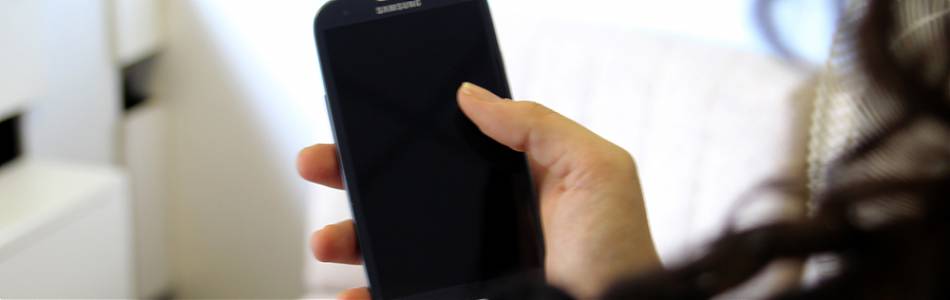
Any mum will tell you, it’s almost impossible to have two hands free at any one time. One hand is holding the baby. The other hand, when mum can spare it, is keeping up with friends and the office, and shopping—yes, all with one hand. When a woman becomes a mum she has 10+ hours more to do in a day, and 14 fewer hours for herself. For years, smartphones have helped busy mums make the seemingly impossible number of tasks on the to-do list, possible.
We’ve always known that mums love their smartphones. But mums have reached a new milestone in their relationships with their mobile. For the first time, mums are relying on smartphones more than laptops or desktops. According to our 2015 State of Modern Motherhood Report, produced in partnership with the IAB, 93% of UK mums regularly use a smartphone, while only 76% report relying on their computer. In 2012, these numbers were reversed. BabyCentre research revealed that, at that time, 86% of mums depended on computers, with just 73% on smartphones.
For brands looking to reach mums, particularly millennials, this is an historic moment to take to heart. Mums now spend an average of 2.1 hours a day online on their smartphone, compared to just 1 hour on a laptop and 1.9 hours watching live TV. Then, when mum is watching TV, it’s not pure kick-up-her-heels relaxation time. Seventy percent of millennial mums are also using their smartphones. Here’s what they’re doing: Nearly 90% report texting, while 82% say they catch up on email, 73% saying they cruise social media, 61% are shopping, and one in three are watching online videos—all this whilst ‘watching’ their favourite show.
So, mums are turning away from TV in favour of their smartphones. So far, so interesting. But what does this mean for marketers? And how does mum respond to brands that attempt to reach her through the highly personalised medium of her mobile? Happily for marketers, younger, millennial mums appear to be receptive to mobile ads. In fact, our research shows that millennial mums are 50% more likely to pay attention to ads on their smartphones than older, Gen X mums.
So how can brands turn mum’s love affair with her mobile to their advantage and successfully engage the audience through mobile advertising? Our research shows that successful digital advertising appeals to a mum’s emotional sensibilities. Specifically – mums told us that it is images of families which can create the strongest emotional connection. We profiled over 1,880 UK mums and found that a picture of a family was most likely to get millennial mums’ attention. A whopping 68% of respondents said that seeing a family together in a digital ad would resonate with them, comparing favourably to a mum holding a baby in her arms (65%); a baby alone (64%); a group of children (45%); a woman leading a meeting at work (16%) and a women running on a beach (14%).
Where content is concerned, ads featuring deals, sales or other money-saving offers were the most attention-grabbing, with 75% of mums saying that this kind of ad is likely to draw them in. Adverts relevant to their life stage and children’s ages (59%); real mums featured in the advertising (59%); and humour (56%) were also key factors in making digital adverts noticeable. Ads based on things mums have searched for (29%) and relating to content being read (28%) were of the least interest.
It’s increasingly clear that the most important route to mums is through mobile advertising. With millennials making up the majority of new mums, brands and agencies need to think of this valuable demographic as tech-savvy and mobile-first, if they want to earn their interest and loyalty. This means building mobile into the center of their advertising plans and specifically designing for these platforms, rather than using cut-down television or rich-media campaigns.
Mobile, simply put, empowers mum to be a super mum. She can discover and thoroughly research new purchases without losing momentum; she can comparison shop without strapping the little one into the car seat for the umpteenth time; and she can connect with friends for advice and companionship without calling a babysitter. Mobile helps her be the mum she wants to be. Brands can be a key part of this relationship. The brands that will be benefit the most, however, will appeal to her emotional sensibilities, understand her desire for value and approach her with authentic, relevant guidance.
By Julie Michaelson, Head of Global Sales at BabyCentre.
PrivSec Conferences will bring together leading speakers and experts from privacy and security to deliver compelling content via solo presentations, panel discussions, debates, roundtables and workshops.
For more information on upcoming events, visit the website.
comments powered by Disqus