
Links are the very stuff of the web. It is how information is architected, how the reader traverses, how search engine crawlers discover content and how algorithms calculate equity to pages.
With the appendix of a rel attribute, a hyperlink can have additional meaning attached to it; giving a richer dimension to the link graph and in many cases describing the interpersonal relationships between the real people who have written the content of linked pages or who are the subject of a page.
On my company website, I regularly write blog posts and news updates about the company, therefore we mark-up links to my Google+ profile with rel=author. On my Google+ profile/About section I’ve added a list of other social profiles e.g. Twitter, Quora and LinkedIn and Google marks these profiles up with the rel=me link attribute. In addition, I can list the blogs and websites I write for and these links are marked-up with rel=contributor-to.
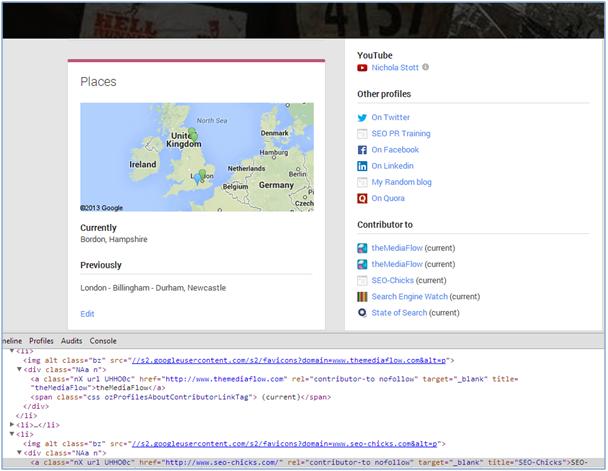
What this means is that I am giving search engines and other web crawlers a picture of who I am (from a data perspective) and my relationship to other sites on the web. There are myriad applications for this data from social graph tools and databases to verified identity methods for social media participation; however from a search perspective this gives an additional, deeper method of qualifying a page quality by including the equity and authority afforded an author; which theoretically is harder to game than previous iterations of link-based algorithms.
In the past decade Google have filed multiple patent applications for what is defined as Agent Rank and in an August 2011 filing “The digital signatures can be used to influence the ranking of web search results by indicating the agent responsible for a particular content piece. In one implementation, the reputation for an agent is expressed as a numerical score. A high reputational score indicates that the agent has an established positive reputation.“ (Source: USPTO.gov.)
Whilst we’re yet to see concrete evidence of author/agent algorithms impacting ranking pages or have any formal confirmation from Google that this is now certainly a factor, from my decade of experience of working in search I’d support this to be the future of the authored web.
By Nichola Stott, Founder of theMediaFlow.
Connect with Nichola Stott on Google+
PrivSec Conferences will bring together leading speakers and experts from privacy and security to deliver compelling content via solo presentations, panel discussions, debates, roundtables and workshops.
For more information on upcoming events, visit the website.
comments powered by Disqus